I remember the confusion I experienced understanding salvation when I first read the Bible. I had heard that whoever believes in Jesus was saved and forgiven for all their sins. But two passages of Scripture confused me as I made my way through the New Testament, the first concerned blaspheming the Holy Spirit, and the second addressed falling away.
I found this note in the Life Application Study Bible on 1John 1:9 very helpful:
1:9 Confession is supposed to free us to enjoy fellowship with Christ. It should ease our consciences and lighten our cares. But some Christians do not understand how it works. They feel so guilty that they confess the same sins over and over, and then they wonder if they might have forgotten something. Other Christians believe God forgives them when they confess, but if they died with unconfessed sins, they would be forever lost. These Christians do not understand that God wants to forgive us. He allowed his beloved Son to die just so he could pardon us. When we come to Christ, he forgives all the sins we have committed or will ever commit. We don’t need to fear that he will cast us out if we don’t keep our slate perfectly clean (John 6:37). Of course we want to continue to confess our sins, but not because we think failure to do so will make us lose our salvation. Our relationship with Christ is secure (John 6:47). Instead, we confess so we can enjoy maximum fellowship and joy with him.
True confession also involves a commitment not to continue in sin. We are not genuinely confessing our sins before God if we plan to commit the sin again and just want temporary forgiveness. We must pray for strength to defeat the temptation the next time it appears.
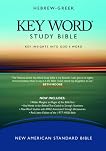
In addition, the following article from the Hebrew-Greek Key Word Study Bible explains that God forgives all who repent for blaspheming the Holy Spirit. Indeed God forgives all people for all sin if they repent and believe in Jesus Christ (1John 1:7). And the subsequent excerpt from the section titled The Interpreter of John Bunyan’s The Pilgrim’s Progress, looks at falling away, and explains that it is only unrepentance that prevents people from receiving God’s forgiveness. Lastly, three passages from Holy Scripture close the article.
From the note on Mark 3:28,29 of the Hebrew-Greek Key Word Study Bible:
3:28-29 This important saying of our Lord referring to the blasphemy against the Holy Spirit occurs also in Mt. 12:31,32 and Lk. 12:10. It speaks of God’s willingness and ability to forgive anyone of any sin and of all their sins put together. It is to be noted that these words of the Lord were spoken immediately after the accusation was made against Him that the works He was doing were done by the power of Beelzebul, the chief of the demons (see Mt. 12:22-30; Mk. 3:20-27). In Lk. 12:10 the Lord’s saying about the blasphemy against the Holy Spirit is separated from the context of the discussion concerning Jesus and Beelzebul which is given in Lk. 11:14-23. The words of Christ become far more understandable if we examine what occasioned them. What the Lord wanted to teach after this discussion regarding the activity of the devil among men was this: The devil is really not the countertype of the Lord Jesus in the plan of man’s salvation, but he is the countertype of the Holy Spirit who’s function is to convict unto repentance or reprove the world of sin, of righteousness, and of judgment (Jn.16:8-15). The devil counteracts this conviction. The verb that is translated as “convict” in Jn. 16:8 is elegxei which means “to bring under conviction.” The Holy Spirit here is presented as the one who brings judgment upon the devil. The two are counteracting each other. The first statement that is made by Christ is that each sin (hamartia, 266), all sins together (pasa, 3956) and blasphemy (blasphemia, 988) shall be forgiven. Mark 3:28, instead of saying every sin and blasphemy, says panta, “all sins,” the neuter plural of pas (3956). The word “blasphemies” means to say something which hurts a person. Hamartia is the inclusive name of all kinds of sins, missing the mark of any kind which God has set for man’s goal. What is stated in this first word is that God is both ready and able to forgive anything. In order to comprehend this, we must first understand the meaning of the word “forgiven,” (aphiemi, 863). It means to send away, to remove the sin from the sinner, so that he is free from it in order that the sin can never be found and charged against him before the judgment seat of God. It is not overlooking the sin, paresis(3929), but removing the sin from the sinner, aphesis (859). In this connection see note on Rom. 3:25. Secondly, observe that this verb is in the passive voice, which means any and all sins will be removed by God. God must be understood at the agent who removes the sin from the sinner. This is particularly the function of Jesus Christ who took upon Himself man’s sin. We must remember however, that no personality of the triune God acts independently, but always in complete and united agreement and cooperation with the other personalities of the Trinity. Thus the agent of “shall be forgiven,” (aphethesetai), must be understood to be God in general and Christ in particular. Thirdly, this verb “shall be forgiven” is in the punctiliar future which means that it will be taken away each time that it is necessary to do so, and it will be done repetitively. It indicates that the forgiveness which man experiences from God is available whenever man asks for it in true repentance. The objects of this forgiveness are “the sons of men” (Mk. 3:28), “men” (Mt. 12:31) and “him” (Lk. 12:10).
In Mk. 3:28 we have panta ta hamartemata, “all the sins.” The word for “sins” here is hamartemata (265) and not hamartia as in Mt. 12:31. Hamartema (singular), as all nouns ending in ma, indicates the result of an action. In this instance, hamartemata(plural) indicates sins as individual acts or the bad reputation resulting from them. The comprehensiveness of the forgiveness which God can give to the sinner is made very clear here. Not only all sin (hamartia) or sinfulness in itself, but also the individual acts of sin, as well as their ill repute brought upon the sinner, are removed. This forgiveness, however, we know from other Scriptures is not automatic, but depends on our true repentance. Every sin is forgiven by God consequent to man’s repentance, and man’s repentance is consequent to the activity of the Holy Spirit in a man’s life. If man resists that activity of the Holy Spirit, he will be unconvicted of either his sinfulness in general or his sin in particular and its ill repute; if man is unconvicted by the Holy Spirit, he will not repent. Consequently, God will not remove that sin or its effects.
Mark adds something which the other two evangelists do not in this first statement about God’s readiness and ability to forgive all sin and blasphemy: “Whatever blasphemies they may utter.” More literally this should be translated: “and blasphemies, (the reports that men will give which will hurt God’s reputation among men) whatever these blasphemies may be if they shall blaspheme.” The verb blasphemesosin, “will blaspheme,” is in the punctiliar future which means at one time and not continuously as a perpetual and uninterrupted mode of life. The Lord is here declaring that no matter how careful we are, we can never live in such a perfect way as to always cause others to believe all that they should about our God whom we represent among them. Our actions portray a different God than what our mouths proclaim. Many times we give the wrong impression to others about our Lord whom we profess to follow. These wrong reputations of God, blasphemiai, will be forgiven. We who love Him allow His Holy Spirit to convict us of our shortcomings in adequately representing God among others. As a result of that conviction, there is the removal of the harm which we have done to the testimony of God.
For a more complete understanding of what these blasphemies are which are generally spoken of by Mark, we must go to Mt. 12:32. Jesus said, “And whoever shall speak a word against the Son of Man, it shall be forgiven him.” The Son of Man here is Jesus Christ. In order for a sinner to appropriate Christ he must repent of his sin (Rom. 10:9; Jn 1:12). But, in order that we may be convicted of our sin, it is necessary for us to allow the Holy Spirit to work in us. In other words, any sin that we confess to the Lord Jesus Christ He will forgive, being able and ready to remove it from us. But, if an individual has not been convicted of sin, how can he confess Christ? And this is what makes the next statement of our Lord in Mt. 12:32 understandable: “But whoever shall speak against the Holy Spirit, it shall not be forgiven him.” In Mk. 3:29 is says, “But whoever blasphemes against the Holy Spirit never has forgiveness.” And in Lk. 12:10 we read, “But he who blasphemes against the Holy Spirit, it shall not be forgiven him.” The verb in Mt. 12:32 is eipe, the subjunctive aorist of lego (3004), which is, “to say at one particular time with full understanding of what one says.” In Mk. 3:29 it is blasphemese the aorist subjunctive of blasphemeo. In Lk. 12:10 it is blasphemesanti. This is a participial noun in the aorist, meaning the one having blasphemed in the past at one particular time or repetitively. It is used as a supposition, meaning that if at any time in the past he did blaspheme. Both words eipe, “say,” and blasphemesanti (being an aorist participle), “having blasphemed,” are indicative of the fact that this saying or blasphemy is a one-time blasphemy either once or on different occasions, and not a continuous life of blasphemy, i.e., constantly attacking the person and work of the Holy Spirit and His reputation among men. This refers first to the resistance against the Holy Spirit for His conviction unto salvation, the initial repentance of man. The declaration is that no one who resists the convicting power of the Holy Spirit can be saved. The secondary meaning is that no one, not even the believer, will be able to escape the consequence of his willful sin (hamartema) if he does not allow the Holy Spirit to convict him of these specific sins, or sinfulness in general, which has hurt God’s reputation among men (Heb. 10:26,27).
As to the relationship of the sin of blasphemy to the Holy Spirit in Mt. 12:32, we have it thus, “But whoever shall speak against (Kata, 2596) the Holy Spirit.” In Mark 3:29 we have, “But whoever blasphemes against the Holy Spirit.” In Greek it does not say “against” but “unto” (eis, 1519), which means “unto or in the face of.” In Lk. 12:10 the same preposition is used. Actually the use of this preposition, eis, makes the blasphemy worse. With kata, “against,” we may understand that the blasphemy is spoken against the Holy Sprit to others, but with the prepositioneis we may understand that the blasphemy is hurled directly in the face of the Holy Spirit. It is as if man is defying the Holy Spirit and saying, “There is nothing you can do to divert me from my present sinful course. I am going to have my own way regardless of the shame brought upon the name of Christ.” The remarks of all three evangelists differ in the last statement concerning the impossibility of forgiveness here and in the hereafter in the absence of man’s acknowledgement of his sin, and consequent convicting of the Holy Spirit. Mt. 12:32 says, “It shall not be forgiven him, either in this age, or in the age to come.” The verbouk aphethesetai, translated “shall not be forgiven,” is in the passive punctiliar future, which means it shall not be forgiven by God, and in particular by Jesus Christ, at any specific time in the future. Matthew says, “shall not be forgiven him,” (auto), meaning, “will not be removed from him.” Put positively, it means it will be counted against him, either in hindering him from entrance into heaven if he only had a false repentance. Mk. 3:29 says, “never has forgiveness.” A more literal translation of the Greek text is, “does not have remission unto the aeon.” Luke simply says, “shall not be forgiven” (ouk aphethesetai). Matthew, however, is the most explicit in saying, “either in this age, or in the age to come.” This is proof that the fate of man as it is determined in this age cannot be altered in the next age. If one does not submit to the convicting power of the Holy Spirit and repent, in the future, God is not going to grant that person exemption from the consequences of his failure to repent during his earthly life. The bed that one makes in his life will be the one he must lie in for eternity!
Only Mark 3:29 has the concluding phrase, “But is guilty of an eternal sin.” The Greek text says, “But guilty is he of eternal judgment.” “Guilty” in Greek is enochos (1777), from the verbenecho and enechomai (1758), “to be held fast, bound, obligated.”
Therefore, enochos means guilty and deserving of the punishment to which he is subject, as also in Mt. 26:66; Mk. 3:29; 14:64. Observe that the verb estin (eimi, 1510) is in the present tense. He is guilty right now, not will be guilty. This guilt is always upon the man who does not recognize the Holy Spirit’s conviction. There is no chance of repenting in the hereafter. If he would recognize it and seek forgiveness here, then he would not be liable at the eternal judgment.
Eternal judgment is based upon the judgment of sin on this earth. In eternity God is going to respect our will which we have exercised in the here and now. If we chose to defy God here and the convicting power of the Holy Spirit, then God is going to defy us in eternity and let us reap the results of the choice which we made. The last phrase of Mk. 3:29 in the Textus Receptus isaionibu kriseos, “eternal judgment or condemnation.” In other manuscripts, instead of kriseos, “judgment,” we havehamartematos, “individual sin or the result of sin,” which agrees with hamartemata in v. 28 in the phrase “all sins…whatever blasphemies.” Both words, krisis and hamartema, would fit perfectly. If it is krisis (2920), it refers to the ultimate judgment of God which means separating or sifting the good from the evil (Mt. 13:41-43; 49-50), but it also includes the punishment for the evil. If we take it as hamartematos, it would refer to the consequence or the result of our unconfessed and unredeemed sin on earth. The adjective aioniou (166) refers to the eternal judgment, that judgment that will have an effect upon us in the future aeon, “generation” or “age.” Since Matthew speaks both of the present generation and the future generation, this must refer to the future generation when we will be judged as to whether we believed on the Lord unto salvation and also for our walk of the life of faith. The phrase aionios krisis, “eternal judgment,” never occurs anywhere else in the N.T. The closest to it we have is in II Thess. 1:9 where it speaks of “everlasting destruction” (olethron, 3639, aioniou); and in Jude 7, “the vengeance of eternal fire,” which in Greek is “of fire,” puros (4442), “eternal,” aioniou in the genitive, “vengeance or judgment,” diken (1349), as a synonym of krisis.
As far as aionion hamartema, “eternal result of sin,” we find it nowhere else in the N.T.
This excerpt is taken from John Bunyan’s legendary classic The Pilgrim’s Progress, from the chapter titled The Interpreter:
So he took him by the hand again, and led him into a very dark room, where there sat a man in an iron cage.
Now, the man seemed very sad to look on. He sat with his eyes looking down to the ground; his hands folded together; and he sighed as if he would break his heart. Then CHRISTIAN asked, "What does this mean?" At which the INTERPRETER bid him talk with the man.
Christian. Then CHRISTIAN said to the man, "What are you?"
Backslider. The man answered, "I am what I was not once."
Chr. What were you once?
Back. The man said, "I was once a fair and flourishing professor, both in my own eyes and also in the eyes of others: I once was, as I thought, right for the Celestial City, and even had joy at the thought that I should get there."
"But the ones on the rock are those who, when they hear, receive the word with joy; and these have no root, who believe for a while and in time of temptation fall away." Luke 8:13
Chr. Well, but what are you now?
Back. I am now a man of despair, and am shut up in it, as in this iron cage. I cannot get out; oh now, I cannot!
Chr. But how did you come to be in this condition?
Back. I stopped watching over my soul; I laid the reins upon the neck of my lusts; I sinned against the Light of the World, and the goodness of God. I have grieved the Spirit, and he is gone. I tempted the devil, and he has come to me. I have provoked God to anger, and he has left me. I have so hardened my heart, that I cannot repent.
Then CHRISTIAN asked the INTERPRETER, "But is there no hope for such a man as this?" "Ask him," said the INTERPRETER.
Chr. Then said CHRISTIAN, "Is there no hope. Must you be kept in the iron cage of despair?"
Back. No, none at all!
Chr. Why? The Son of the Blessed is very pitiful.
Back. I have crucified him to myself afresh;
"if they fall away, to renew them again to repentance, since they crucify again for themselves the Son of God, and put Him to an open shame." Hebrews 6:6
I have despised his person;"But his citizens hated him, and sent a delegation after him, saying, ‘We will not have this man to reign over us.’" Luke 19:14
I have despised his righteousness; I have counted his blood an unholy thing; I have done despite to the Spirit of grace:"For if we sin willfully after we have received the knowledge of the truth, there no longer remains a sacrifice for sins, but a certain fearful expectation of judgment, and fiery indignation which will devour the adversaries. Anyone who has rejected Moses’ law dies without mercy on the testimony of two or three witnesses. Of how much worse punishment, do you suppose, will he be thought worthy who has trampled the Son of God underfoot, counted the blood of the covenant by which he was sanctified a common thing, and insulted the Spirit of grace?" Hebrews 10:26-29
Therefore I have shut myself out of all the promises, and there now remains for me nothing but threatenings--dreadful threatenings --fearful threatenings, of certain judgment and fiery indignation, which shall devour me as an adversary.Chr. For what did you bring yourself into this condition?
Back. For the lusts, pleasures, and profits of this world; in the enjoyment of which I promised myself much delight; but now everyone of those things bites me and gnaws me like a burning worm.
Chr. But can't you not now repent and turn?
Back. God has denied me repentance. His Word gives me no encouragement to believe: yes, he himself has shut me up in this iron cage; nor can all the men in the world let me out. Oh, eternity! eternity! how shall I grapple with the misery that I must meet with in eternity?
Inter. Then the INTERPRETER said to CHRISTIAN, "Let this man's misery be remembered by you, and be an everlasting caution to you."
Revelation 21:8 warns us, "But the cowardly, unbelieving, abominable, murderers, sexually immoral, sorcerers, idolaters, and all liars shall have their part in the lake which burns with fire and brimstone, which is the second death."
And Ezekiel 33:10-20 informs us concerning death:
10 "Therefore you, O son of man, say to the house of Israel: ‘Thus you say, "If our transgressions and our sins lie upon us, and we pine away in them, how can we then live?"’
11 "Say to them: ‘As I live,’ says the Lord GOD, ‘I have no pleasure in the death of the wicked, but that the wicked turn from his way and live. Turn, turn from your evil ways! For why should you die, O house of Israel?’
12 "Therefore you, O son of man, say to the children of your people: ‘The righteousness of the righteous man shall not deliver him in the day of his transgression; as for the wickedness of the wicked, he shall not fall because of it in the day that he turns from his wickedness; nor shall the righteous be able to live because of his righteousness in the day that he sins.’
13 "When I say to the righteous that he shall surely live, but he trusts in his own righteousness and commits iniquity, none of his righteous works shall be remembered; but because of the iniquity that he has committed, he shall die.
14 "Again, when I say to the wicked, ‘You shall surely die,’ if he turns from his sin and does what is lawful and right,
15 "if the wicked restores the pledge, gives back what he has stolen, and walks in the statutes of life without committing iniquity, he shall surely live; he shall not die.
16 "None of his sins which he has committed shall be remembered against him; he has done what is lawful and right; he shall surely live.
17 "Yet the children of your people say, ‘The way of the Lord is not fair.’ But it is their way which is not fair!
18 "When the righteous turns from his righteousness and commits iniquity, he shall die because of it.
19 "But when the wicked turns from his wickedness and does what is lawful and right, he shall live because of it.
20 "Yet you say, ‘The way of the Lord is not fair.’ O house of Israel, I will judge every one of you according to his own ways."
Finally, 1John 1:7 blesses us with these words, “But if we walk in the light as He is in the light, we have fellowship with one another, and the blood of Jesus Christ His Son cleanses us from all sin.”